


Purchasing a home in Bergen County means choosing from an unusually broad mix of properties, from early-20th-century houses and established suburban homes to newer townhomes and recently constructed properties.
That variety is one of the area’s attractions, but it also means inspection priorities can vary considerably from one property to another.
A home inspection does not technically “pass” or “fail” a property. Instead, it gives buyers a detailed picture of the home’s current condition, including defects, maintenance concerns, safety issues, and systems approaching the end of their useful lives.
For buyers, understanding what to look for in a Bergen County home inspection can make the process much more productive.
Understanding the Bergen County Home Inspection Process
A thorough Bergen County home inspection is a critical step for buyers to evaluate structural integrity, aging mechanical systems, and weather-related wear. Utilizing a detailed Bergen County home inspection guide ensures you identify major hidden defects, empowering you to negotiate repair credits and protect your long-term equity.
Essential Home Inspection Tips Bergen County Buyers Need
Prioritizing the Big Ticket Items
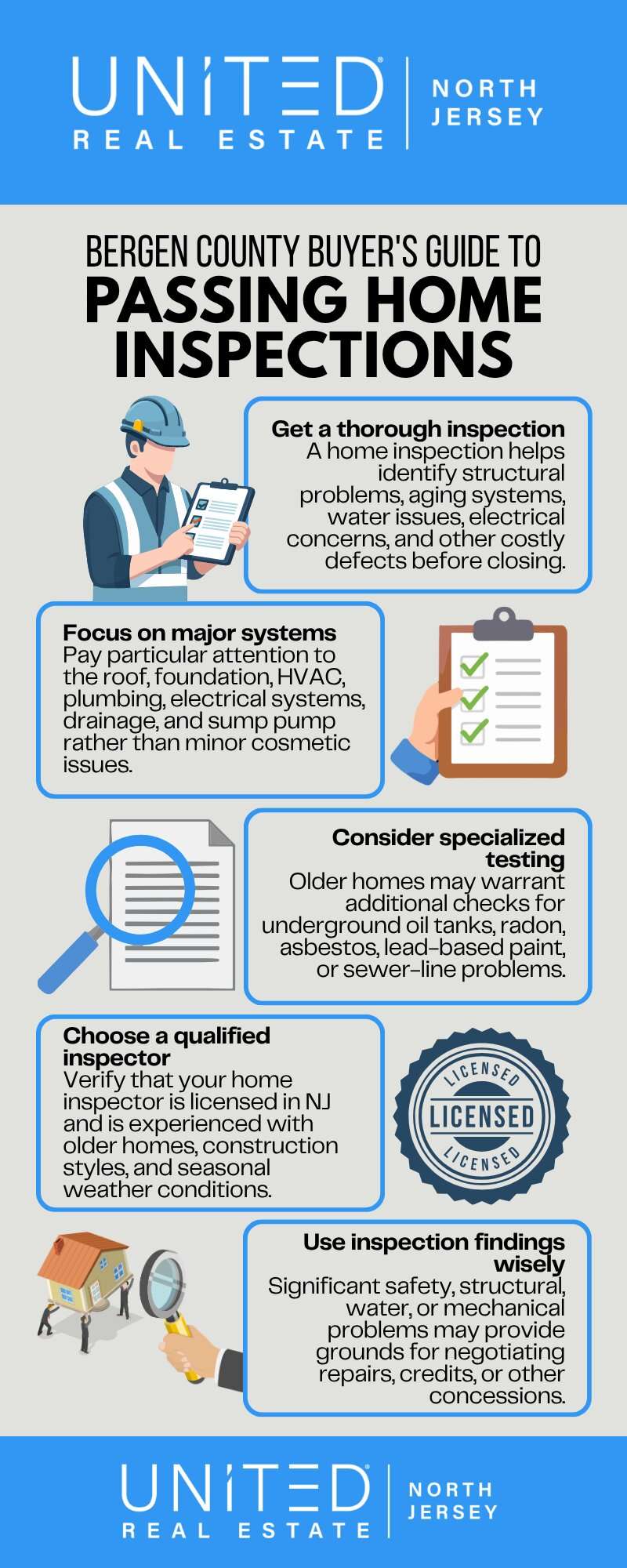
The best home inspection tips Bergen County buyers can follow start with the systems that could create the largest unexpected expenses.
Pay close attention to:
- Roof: Ask about its apparent age, visible deterioration, flashing, drainage, and signs of previous repairs.
- HVAC: Determine the age and condition of heating and cooling equipment and whether it appears properly maintained.
- Foundation: Look for significant cracking, water intrusion, settlement concerns, or other indications that warrant evaluation by a structural professional.
- Electrical: Check for outdated equipment, unsafe wiring, insufficient capacity, and other conditions identified by the inspector.
- Plumbing: Watch for leaks, corrosion, aging supply lines, drainage problems, and other deficiencies.
- Water management: Examine gutters, downspouts, grading, sump pumps, and basement areas for signs of moisture.
A worn paint finish or dated kitchen is usually a different financial consideration from a failing roof or recurring foundation water problem. Buyers should keep that distinction in mind when reviewing the report.
Checking for Environmental Hazards
Older Bergen County properties deserve additional attention because some may have used heating oil, including underground residential heating-oil tanks.
A standard home inspection may not establish whether an underground tank is present or determine whether soil contamination exists.
A tank sweep or other appropriate subsurface investigation can be considered when the property’s history, visible evidence, municipal records, or other circumstances create a reason for concern.
If a tank or potential contamination is discovered, buyers should consult qualified environmental professionals before making assumptions about removal or cleanup.
Radon is another consideration. The U.S. Environmental Protection Agency recommends testing homes for radon regardless of their geographic zone. For a home with elevated results, additional mitigation may be appropriate.
Buyers should therefore consider radon testing as part of their broader due diligence, particularly when the property includes a basement or lower-level living space.

Finding the Best Bergen County Home Inspectors
Credentials and Local Expertise
When selecting Bergen County home inspectors, buyers should verify that the inspector is properly licensed in New Jersey. The state’s Home Inspection Advisory Committee regulates the profession and establishes licensing and professional requirements.
Certifications from recognized professional organizations such as ASHI or InterNACHI can provide additional information about an inspector’s professional training, although buyers should still verify the inspector’s New Jersey license and ask what the inspection actually includes.
Local experience can also be valuable. An inspector familiar with Bergen County housing is more likely to understand the types of construction, renovations, drainage conditions, heating systems, and older infrastructure frequently encountered in the area.
The Value of an On-Site Walkthrough
Whenever possible, buyers should attend the inspection rather than relying solely on the written report. Walking through the property with the inspector allows buyers to ask questions and see issues firsthand.
A good inspector can explain how systems operate, point out maintenance concerns, identify areas that deserve monitoring, and explain which findings may warrant evaluation by another specialist.
This can also provide useful Bergen County real estate advice about seasonal maintenance, such as preparing exterior plumbing for freezing temperatures, maintaining gutters and drainage systems, monitoring sump pumps, and protecting older exterior components from winter weather.
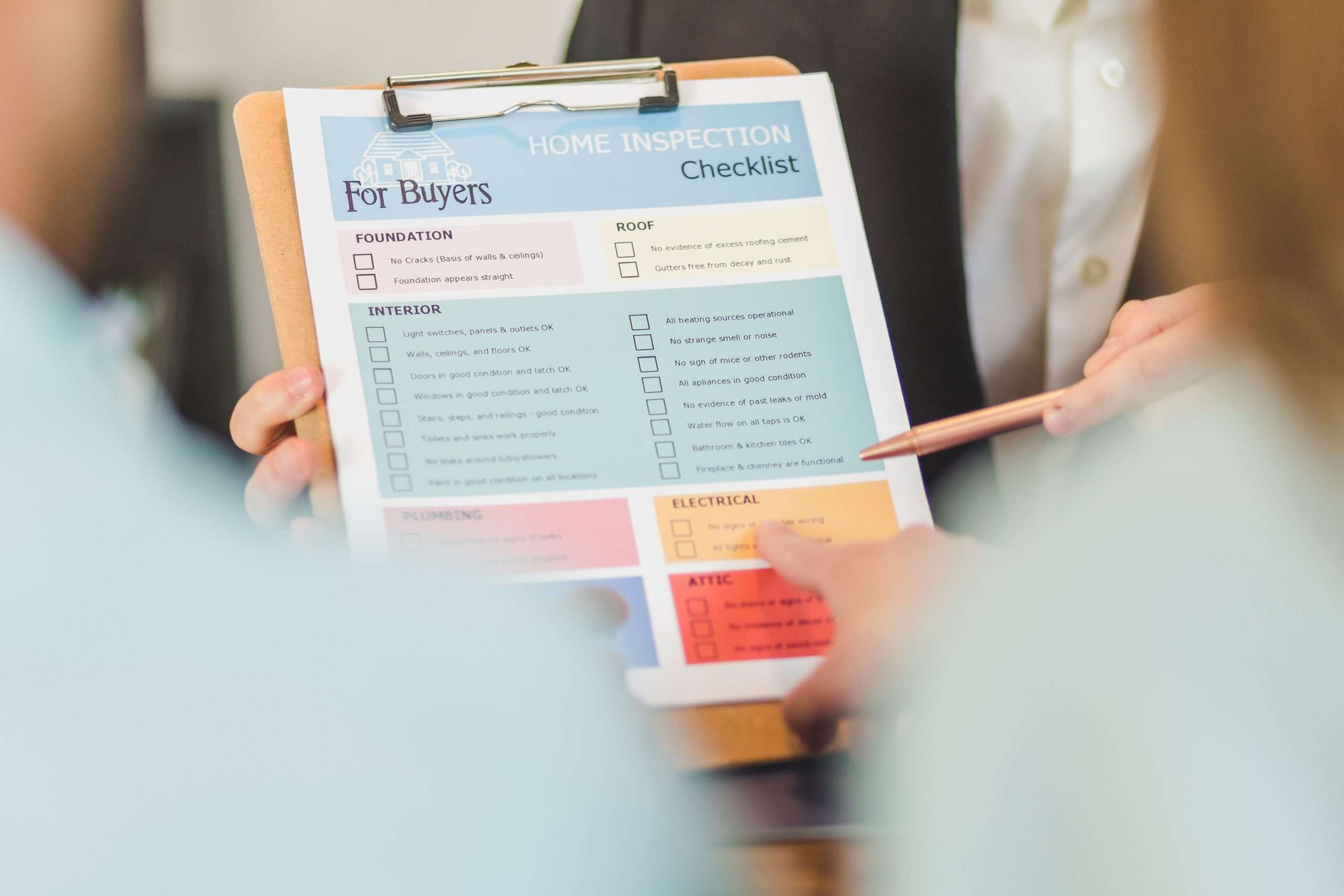
Navigating a Home Inspection Bergen County NJ Checklist
Historic Homes vs New Construction
Older homes require particular attention because their construction methods and materials can differ substantially from modern standards.
A home inspection Bergen County NJ buyers arrange for an older property in communities such as Ridgewood or Glen Rock may identify aging electrical components, older plumbing materials, foundation movement, deteriorated masonry, outdated heating equipment, or evidence of previous alterations.
Knob-and-tube wiring, for example, can be found in some older homes, although its presence depends on the property’s age and subsequent renovations. Galvanized plumbing may also occur in older housing stock.
Some properties may contain materials that require specialized evaluation, including asbestos-containing materials or lead-based paint.
The inspection itself does not necessarily determine whether every potentially hazardous material is present. Specialized testing may be needed when there is a specific concern.
Modern Maintenance Checks
Newer construction should not be treated as maintenance-free.
Inspectors should still examine exterior grading, drainage, roofing, plumbing, HVAC equipment, electrical systems, windows, insulation, and visible workmanship. Poor grading can direct water toward the foundation and contribute to basement or crawl-space moisture.
Buyers should also review permits, warranties, certificates, and available documentation for additions, renovations, and major systems.
For newer properties, construction quality and drainage deserve attention because even recently built homes can develop problems when water is not properly directed away from the structure.

Applying Bergen County Real Estate Advice Before Closing
Negotiating the Inspection Contingency
Once the inspection report arrives, the home-buying process in Bergen County can enter an important negotiation stage.
Not every inspection finding warrants a request from the seller. Buyers should focus on material issues that affect safety, structural integrity, water intrusion, major mechanical systems, or significant near-term expenses.
Depending on the contract and circumstances, buyers may seek seller repairs, credits toward allowable closing costs, a price adjustment, or another negotiated solution. The available options depend on the purchase agreement and the parties’ negotiations.
Buyers should work with their real estate agent and, when appropriate, attorney or other qualified professionals before making decisions about significant inspection findings.
Avoiding Cosmetic Distractions
A long inspection report can look intimidating. It is normal for reports to contain numerous observations, including relatively minor maintenance items.
A loose door handle, worn caulking, aging paint, or a small cosmetic defect should generally be evaluated differently from a structural concern, active water intrusion, unsafe electrical condition, or failing major system.
The goal is not to create a perfect house. It is to understand the property’s condition and make an informed decision about the costs and responsibilities that come with ownership.
Bergen County Inspection Focus Area Table
The age categories are guidelines rather than hard rules. Renovations can significantly change a property’s condition, so buyers should evaluate the individual home rather than relying solely on its construction date.
Safeguard Your New Jersey Investment
A thorough inspection is one of the most useful forms of due diligence available to a homebuyer. The objective is not to find a property with absolutely no defects. Virtually every home has maintenance needs, particularly properties with decades of use.
Instead, buyers should understand which findings are significant, determine what may require additional professional evaluation, and account for future repair and replacement costs.
Following a trusted Bergen County home inspection guide can help buyers prepare for the process, while working with qualified home inspectors in Bergen County can provide a clearer understanding of the property’s condition.
The right home inspection tips Bergen County buyers receive should ultimately help them make informed decisions about safety, maintenance, costs, and negotiations.
Whether you’re considering an older home, a renovated property, or a new construction, careful due diligence can make buying a home in Bergen County a more confident and manageable experience.
If you’re buying a home in Bergen County and want help evaluating a property, understanding inspection findings, or navigating the negotiation process, feel free to contact me today at (201) 450-0015 or kriskehoerealestate@gmail.com.
Frequently Asked Questions
How much does a standard Bergen County home inspection typically cost in 2026?
A standard New Jersey home inspection in 2026 commonly falls in the several-hundred-dollar range, with current estimates generally around $325 to $700, depending on the property’s size, age, location, complexity, and services included. Larger homes and properties requiring additional services can cost more. Buyers should request a written quote that clearly identifies what is included.
What are the most common issues Bergen County home inspectors find in older homes?
Common findings can include aging roofs, deteriorated masonry, foundation or drainage concerns, outdated electrical components, older plumbing, moisture intrusion, aging heating systems, and deferred maintenance. Older homes may also require specialized evaluation for materials or environmental concerns that are outside the scope of a standard inspection.
Does a home inspection in Bergen County, NJ mandate testing for underground oil tanks?
A standard home inspection does not automatically establish whether an underground oil tank is present or require a tank sweep in every transaction. However, because underground residential heating-oil tanks can present environmental and financial risks, buyers may want to consider a tank investigation when property history or site conditions justify it.
Can I negotiate the purchase price based on the Bergen County home inspection guide report?
Potentially, yes. Inspection findings can become part of negotiations when the purchase agreement permits it. Buyers may request repairs, credits, or price adjustments depending on the circumstances. Whether the seller agrees is a matter of negotiation and the specific terms of the contract.
How quickly do I need to schedule a Bergen County home inspection after my offer is accepted?
Buyers should schedule the inspection as soon as practical after the offer is accepted. The important deadline is the inspection-contingency period established by the purchase contract. Waiting too long can leave less time to obtain additional evaluations and negotiate before contractual deadlines expire.
What Bergen County real estate advice applies to homes with finished basements?
Finished basements deserve careful inspection for moisture, drainage, sump-pump operation, foundation conditions, ventilation, electrical work, and signs of previous water intrusion. Buyers should also determine whether renovations were properly permitted where required and whether the finished space is represented accurately in property records and the transaction documents.
Is it safe to buy a home in Bergen County without an inspection if the house is brand new?
New construction can still have defects or maintenance concerns, so buyers should not automatically assume a brand-new property is problem-free. An independent inspection can identify issues that may need attention before or after closing. Buyers should also review the builder’s warranties, documentation, permits, and contractual obligations.